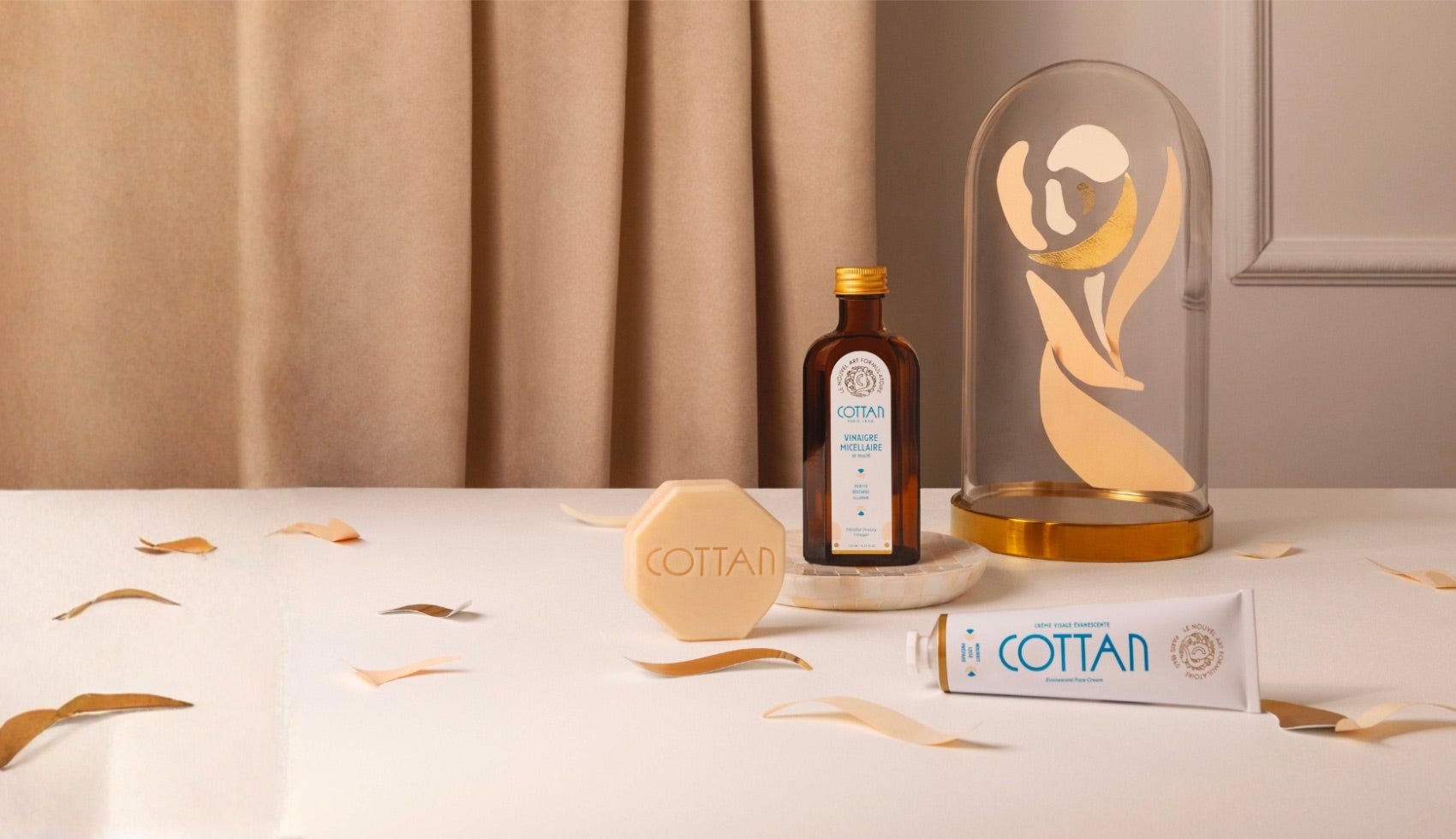
PrimumNon Nocere.
The story of a doctor
who redefined beauty.
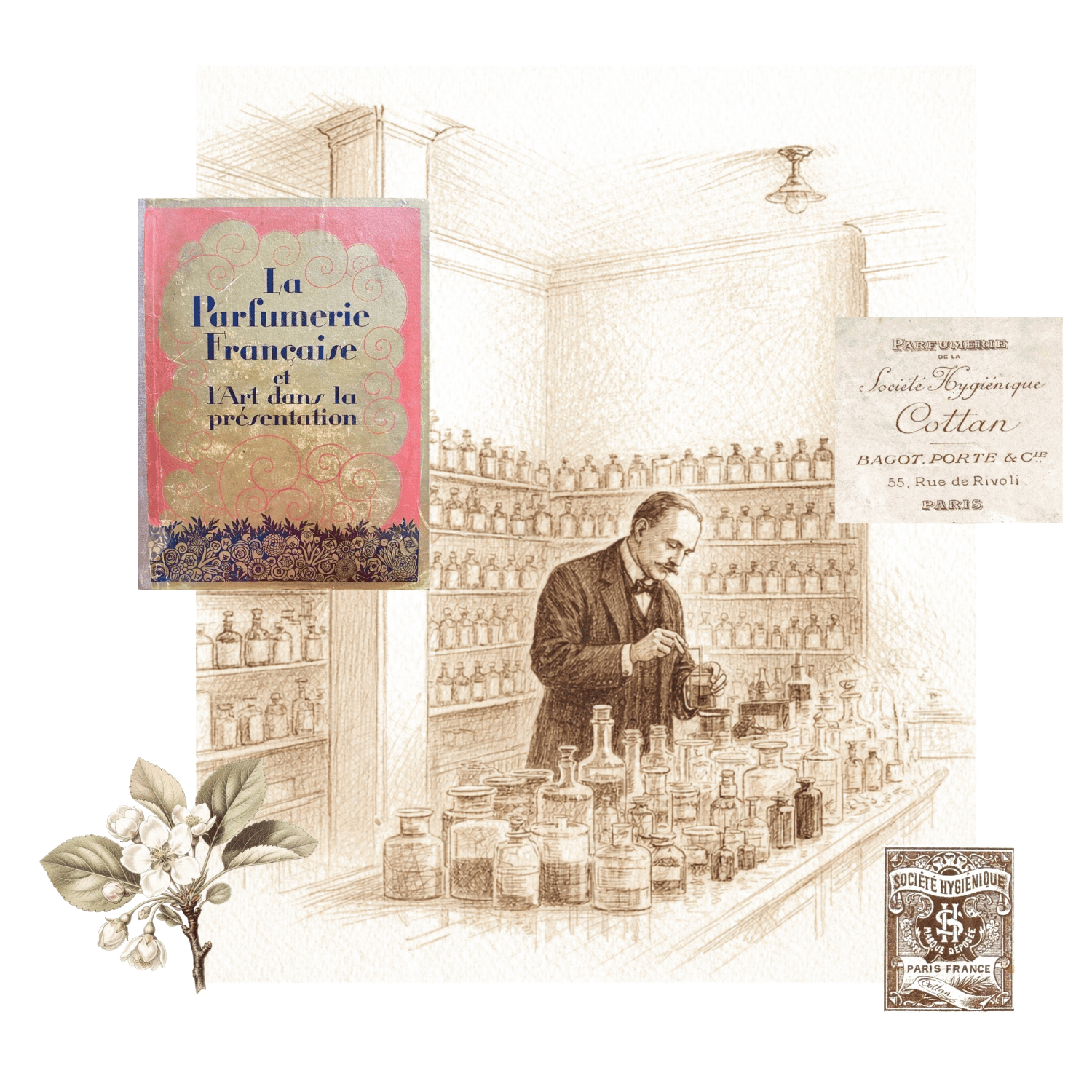
Maison COTTAN was born in Paris in 1840 from one doctor's conviction that beauty should never harm. Lost after the Great War, it was reborn in 2021 — with the certainty that the formulation intelligence of the 19th century has never been more relevant.
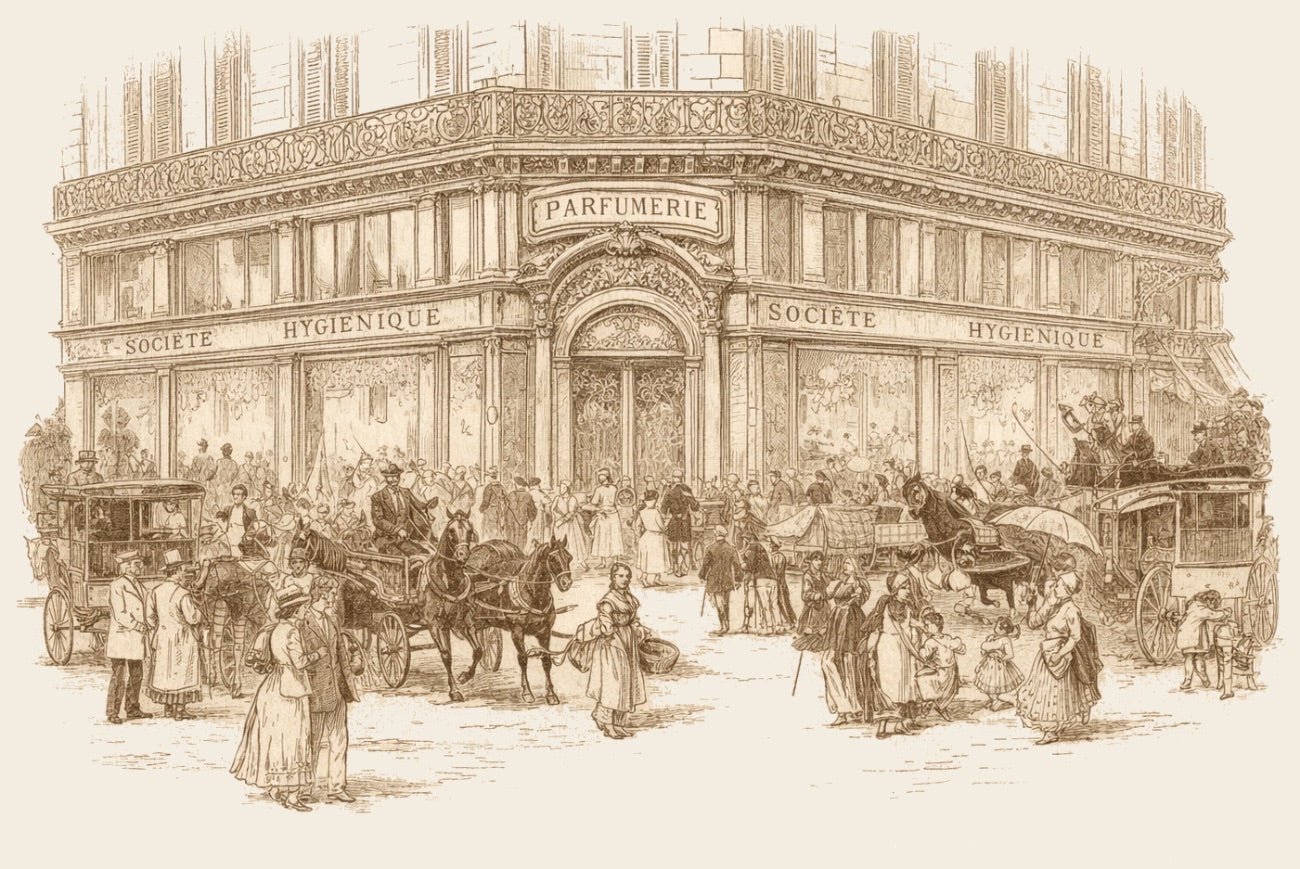
The Perfumery of the Hygienic Society · boutique rue de Rivoli, Paris
Without reaching back to ancient times and miraculous remedies, one particular period commands attention: the second half of the 19th century. It was then that cosmetics became an industry, replacing the artisanal traditions of earlier eras. This period saw the rise of brands whose modernity remains astonishing to this day.
Jean-Claude Le Joliff, President of the Cosmétithèque — Legato n°1, 2021In Paris,
the golden age of beauty.
In mid-19th century France, a profound transformation was underway. Cities were expanding, industrialization was reshaping daily life, medicine was advancing rapidly, and scientific discoveries were permanently altering the relationship between body, health and hygiene.
Driven by the hygienist movement, the century gave rise to a genuine culture of modern personal care. Doctors, pharmacists, chemists and perfumers converged around a shared ambition: to create safer, more effective treatments for a society that placed progress at the heart of its identity.
In Paris — capital of luxury and invention — this revolution took on singular importance. The great perfume houses emerged, bottles grew ever more refined, and the Universal Exhibitions carried the image of French savoir-faire, at once scientific and exquisite, across the world.
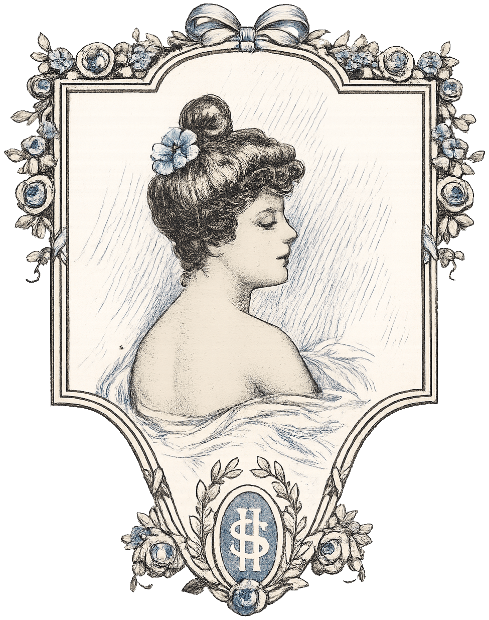
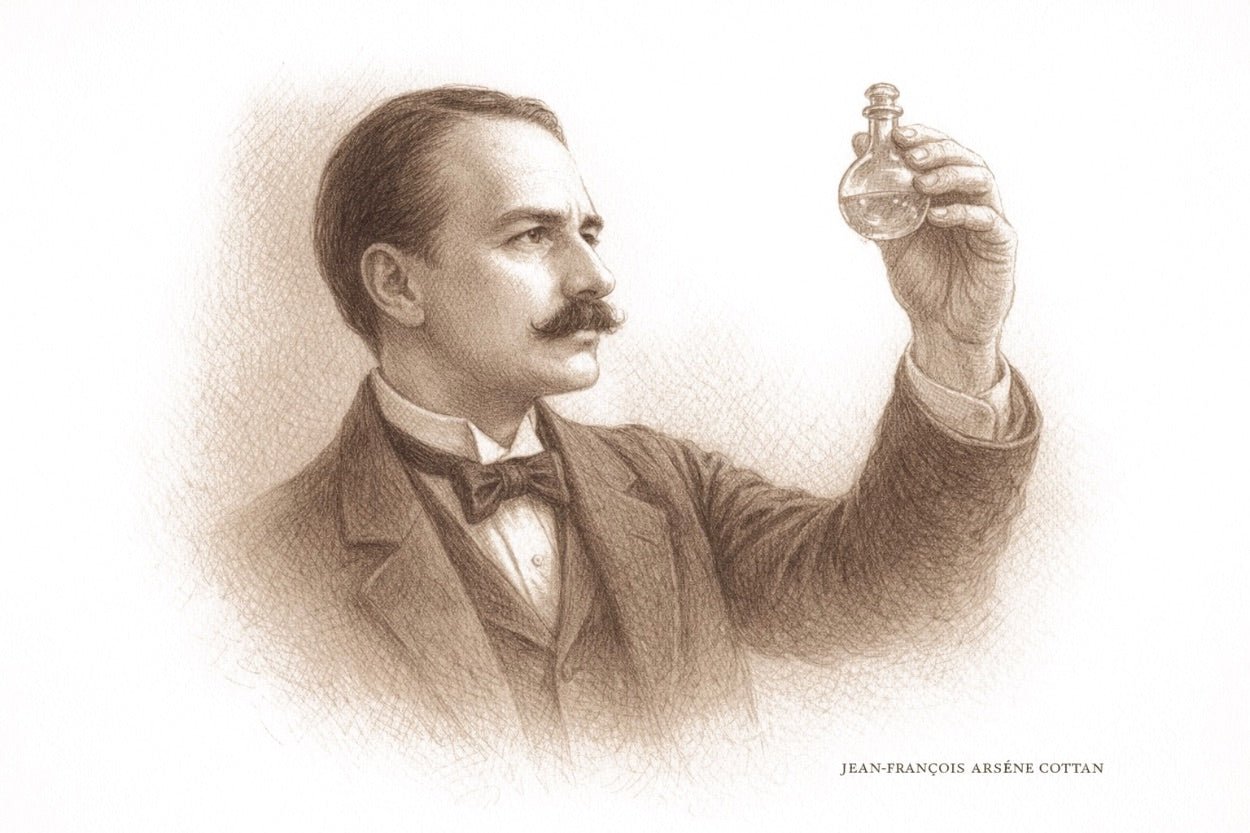
The Hygienic Society has imposed upon itself the duty of delivering to the public only preparations having real and well-established properties, and previously submitted, for their ingredients and composition, to doctors, chemists and other special scientists.
Journal Le Siècle, issue of October 22, 1843Jean-François Arsène Cottan,
doctor and pioneer.
In an era captivated by progress yet still rife with dubious preparations, Doctor Jean-François Arsène Cottan chose a singular path. In 1840, he founded the Hygienic Society with the deep conviction that cosmetics cannot be dissociated from scientific requirements and respect for the skin.
At a time when cosmetics was only just entering the industrial age, Dr. Cottan laid the foundations of a pioneering vision — beauty informed by science, attentive to skin health, conceived for the long term rather than fleeting artifice.
The Hygienic Society,
a meteoric rise.
Success came swiftly. From the heart of Paris, the House won over the ladies of France, then Europe, and even America.
Creation of the Hygienic Society of Doctor Cottan. First principle: treat before embellishing.
Installation at n°5 rue Jean-Jacques Rousseau, Paris 1ᵉʳ. First hygiene formulas without animal compounds.
Opening rue de Châteaudun. Outreach in Europe and America.
Death of the founder. The House passes into the hands of its partners.
Rue de Rivoli. Alongside Coty, Molinard and Guerlain.
Art Nouveau,
rue de Rivoli.
After his death in 1869, the House passed to his associates — who only increased its prestige and renown.
This era coincided with the apogee of Art Nouveau — a movement that celebrated the living world, natural curves, and placed women at the centre of its artistic imagination. Cottan embraced it fully: the House's visual language and formulations evolved to embody this aesthetic of nature sublimated.
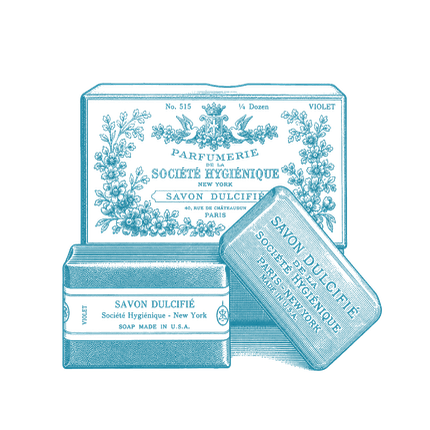
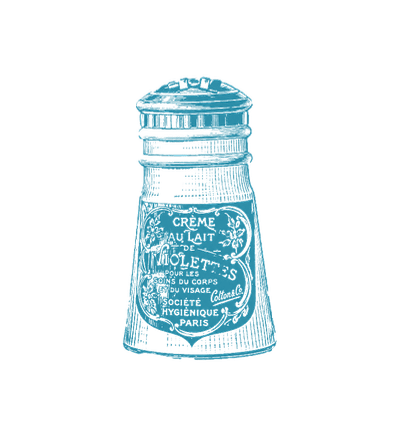
Dr Cottan's successors, while keeping pace with the progress of science, always scrupulously upheld the principles set down by the founder. Thus even in more recent creations — the violet milk cream, Kalodermal fluid, cosmetics — only ingredients possessing the most proven hygienic qualities were ever admitted.
French Perfumery and Art in presentation, 1925 — BNF / GallicaThe creations
which marked their time


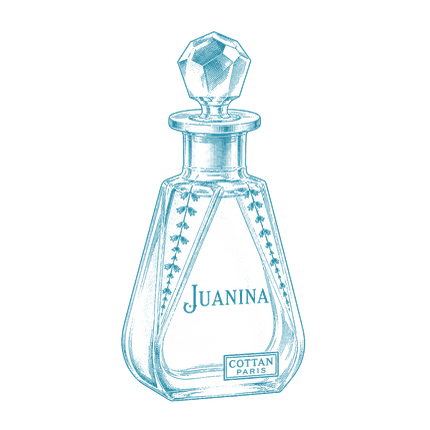
The fire. Oblivion.
Almost a century.
The First World War struck the House head-on. The Courbevoie workshops burned during the conflict. The global economic crisis dealt the final blow. The name Cottan all but vanished from memory — for nearly a century.
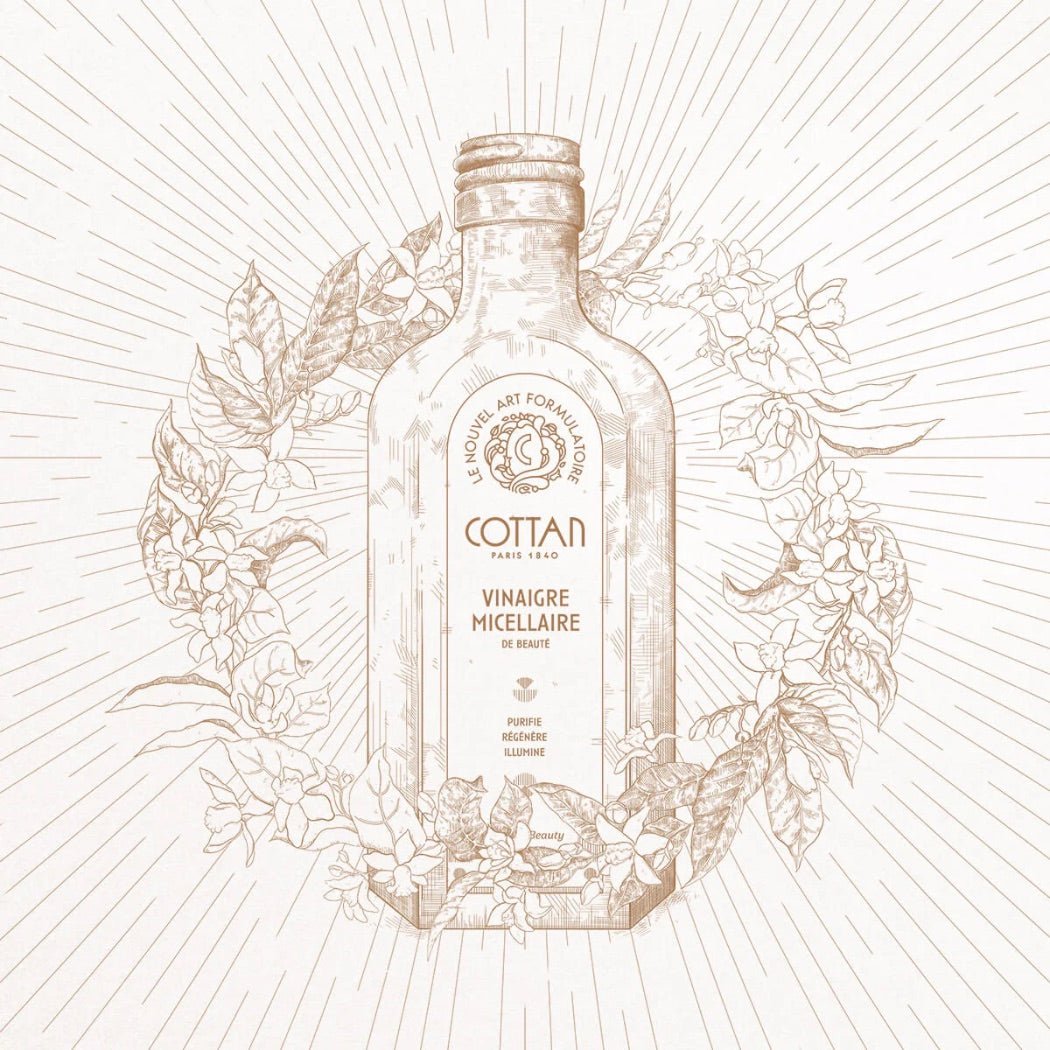
Le Nouvel Art Formulatoire Beauty Micellar Vinegar
Archives found.
The house awake.
Cottan's renaissance began in the archives. Trade registers, holdings of the Bibliothèque nationale de France, collections of antique bottles — until the two patents of May 10, 1842 surfaced.
The most delicate work lay elsewhere: unravelling the logic behind the formulas — understanding not what the preparations contained, but why they worked. This deciphering, undertaken alongside France's foremost dermo-cosmetic formulators, made the rewriting possible — transposing the intelligence of 1840 into the demands of contemporary cosmetology.
Reviving Cottan never meant reproducing the past — but prolonging its intelligence.
Renaissance of the brand, driven by scientific, historical and genealogical research. Partnership with the Cosmetic Library of Jean-Claude Le Joliff, to reveal the work of Jean-François Arsène Cottan.
Clean Beauty certification by the independent Swiss laboratory Biorius. CosmeticMag Awards for Dulcified Soap. Listing at Printemps de Paris and the French Pharmacy in London.
Unique R&D program based on innovation through tradition. Relaunch of Kalodermale Hand Cream. Cosmoprof Asia of Hong Kong; launches in Korea, Macau, Vietnam and Japan.
Participation in Tranoï in Tokyo and BeautyWorld in Dubai. Launch of the Make-up Remover Powder, Hydrating Floral Water and Vitamin C Healthy Glow Serum.
European Natural Beauty Awards for the Beauty Micellar Vinegar. TPE d'Occitanie Award. Listed at Printemps New York — more than a century after the House's disappearance from America.
Cosmoprof Bologna. Launch in Thailand with Central Group. Research programme inspired by the first French-language Pharmacopoeia (1837). Launch of the Cica-Cold Face Cream and Silky Exfoliating Balm.
The New Art of Formulation
Definition and practice.
The past is a source code — one from which our master formulators draw to shape the beauty of tomorrow.
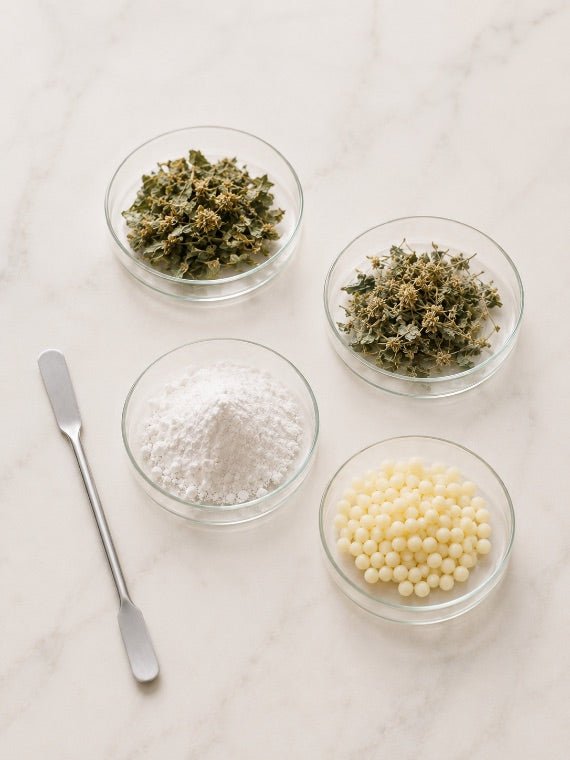
The fine selection of ingredients
From active ingredients to functional ingredients, each must be chosen carefully to serve the purpose of the formula, and to elegantly combine effectiveness, tolerance and pleasure of the senses.

The precision of proportions
The merit of a formula is measured not by the number of its ingredients, but by the precision of their balance — a secret known only to master formulators.
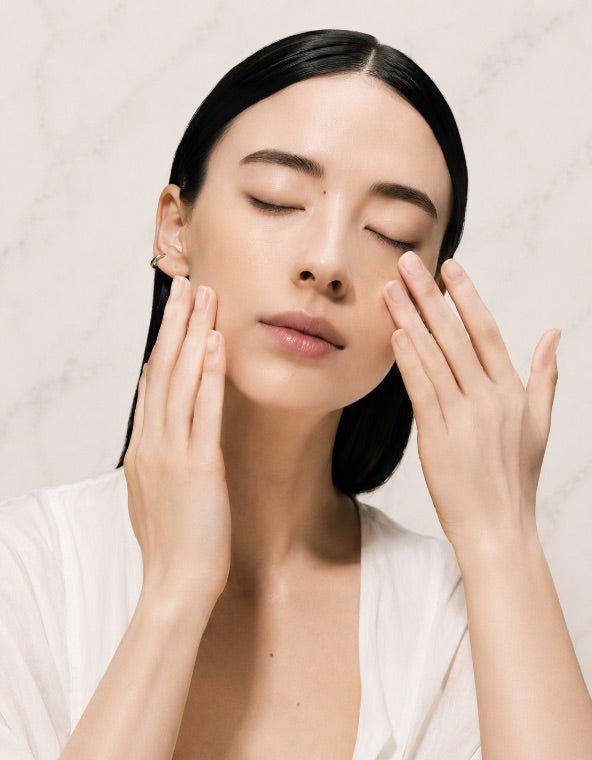
The sensory as proof
A well-crafted formula reveals itself first through the experience it delivers. Its texture, its fragrance, its affinity with the skin — each a testament to the quality of its making.